Faceless YouTube channel: how documentary videos get made
A YouTube documentary without ever going on camera: voice-over, scene edit, motion graphics, captions and thumbnails. We compare noir motion, flat 2D illustration and soft illustration styles through our own work.
The secret of a faceless channel isn't the camera, it's rhythm. When viewers can't attach to a face, what keeps them on screen is an image that refreshes every 3–6 seconds and lands on the words of the voice-over. Over the last two months we produced faceless documentaries in three different styles; here's how they differ, through real work.
Three styles, three topics
| Style | Work | When |
|---|---|---|
| Black-gold noir motion | The 6 Levels of Wealth | Finance, power, systems |
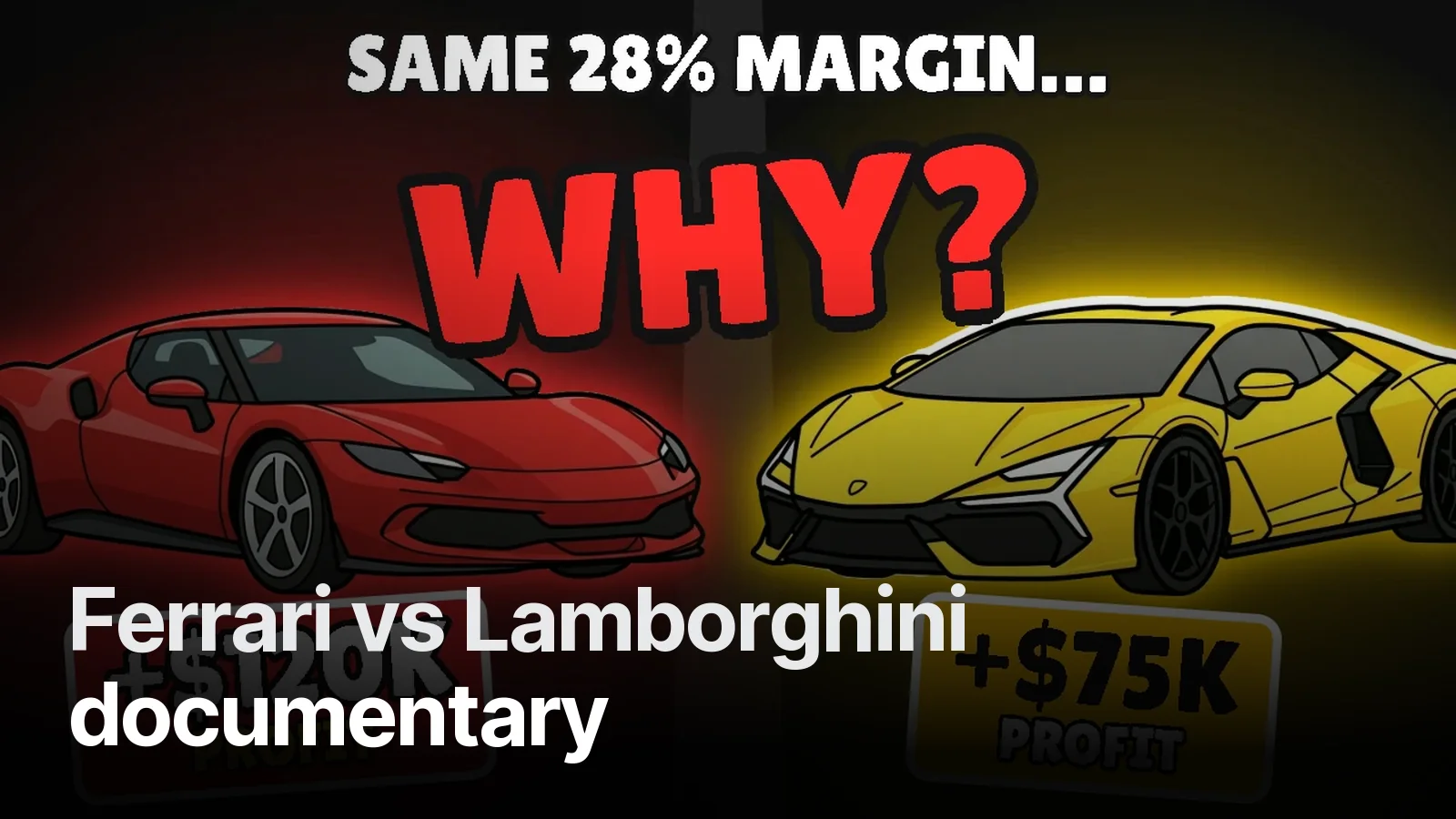
| Flat 2D illustration | Ferrari vs Lamborghini | Comparisons, "how it makes money" |
| Soft illustration | Parenting channel | Health, family, calm explainers |
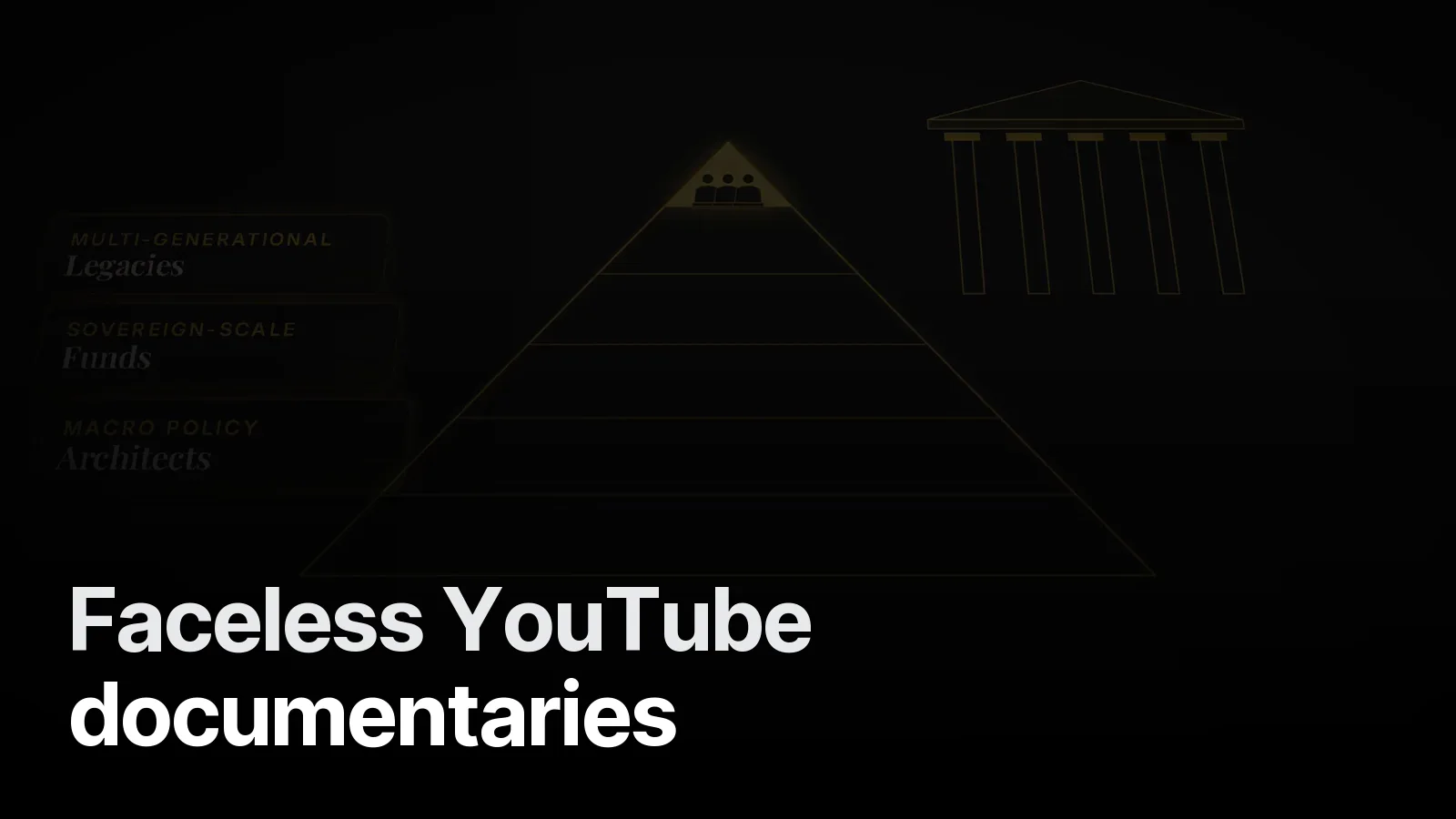
Noir: no hard cuts; every graphic morphs into the next. A six-tier pyramid became the spine of the video, one tier lighting up per chapter. Single lines, lots of empty space, serif type. For 13 minutes the viewer always knows where they are.
Flat 2D: about 150 scenes, 3–5 seconds each. We generated the illustrations text-free and set every figure in code — prices roll on counters and there isn't a single typo on screen. Music isn't continuous; just bass hits at tension points.
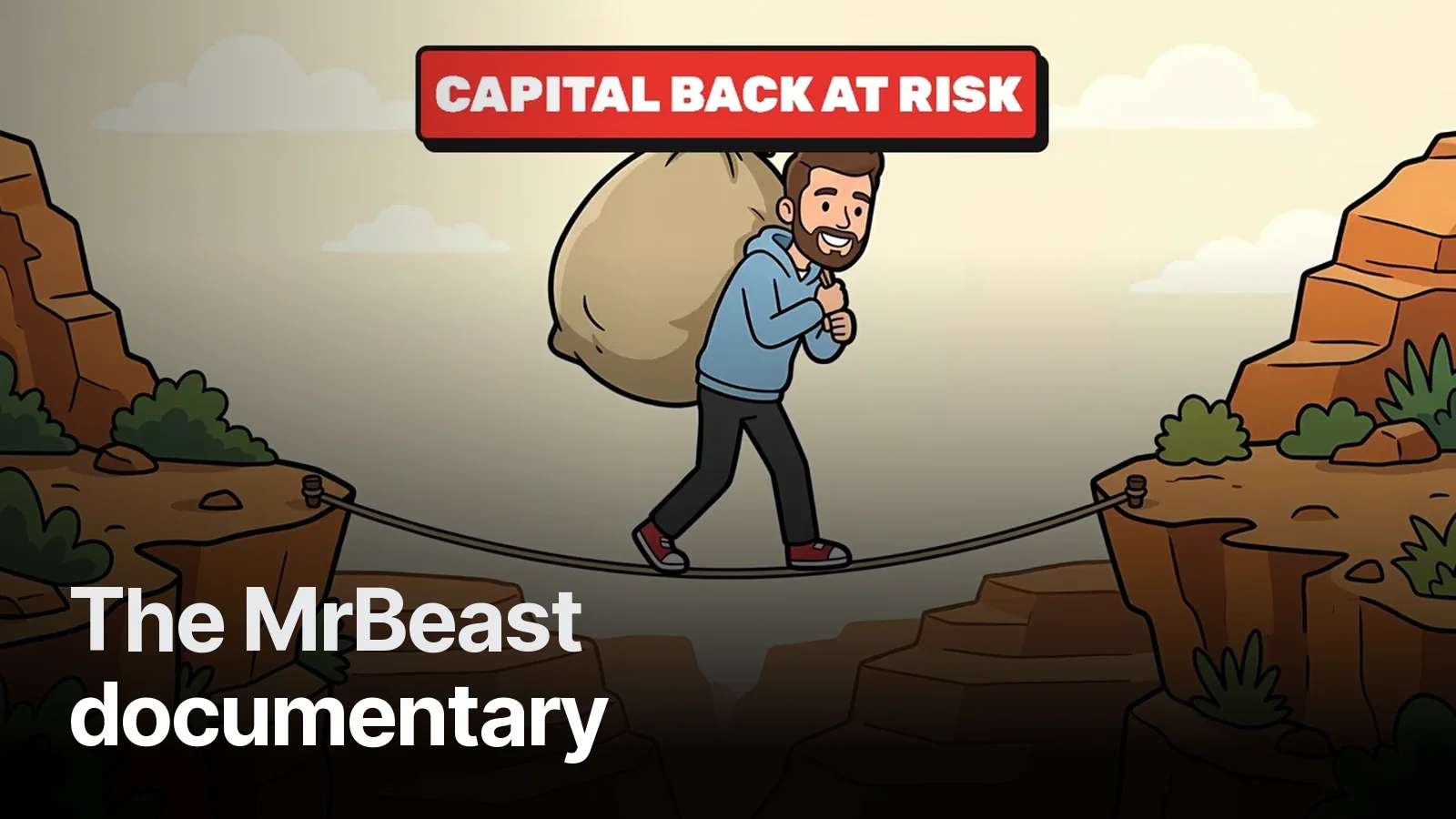
Illustration: one scene per sentence, slow push-ins, word-highlight captions. Here much of the job is weeding: in AI scenes hair colour changes and objects disappear, so we check every clip by eye and cut continuity errors.
Production order
- Script and voice-over — everything starts from the audio.
- Word alignment — we time the voice-over word by word; edit decisions hang on those timings.
- Visual system — colour, font, a recurring "anchor" graphic (a pyramid, two brand colours…).
- Scene production and edit
- Sound design — whooshes, hits, ticks; music sitting under the voice.
- Captions and delivery — burned in and .srt.
- Thumbnails — three ideas, for Test & Compare.
Thumbnails matter more here
A faceless channel has no face on the thumbnail either, so the idea and the type are everything. See the three-way sets we built for our documentaries on the YouTube thumbnails page.
Three thumbnails built on three different ideas for one video. Upload them to YouTube’s Test & Compare and let viewers pick the winner.
What’s in it 5
- 3 thumbnails, 3 separate hypotheses (promise · number · curiosity)
- 1280×720, under 2 MB, JPG + PNG
- Legibility check at phone size
- Title suggestion that doesn’t repeat the thumbnail
- Layered source file
Frequently asked
1.What does a faceless YouTube channel need?
A script, a good voice-over and a visual language that carries the scenes: motion graphics, illustration or stock footage. The edit should land on the words of the voice-over, and the thumbnails should belong to one family across videos.
2.Which visual style works best?
It depends on the topic. Noir or minimal motion for finance and power, flat 2D illustration for comparisons and 'how it makes money' topics, soft illustration for health and family.
3.How long does a documentary edit take?
An 8–15 minute episode with script and voice-over ready is usually delivered within a week; on a series, later episodes get faster because the visual system already exists.
4.Do you make the thumbnails too?
Yes — a Thumbnail Trio of three A/B-ready thumbnails per episode, on its own or together with the documentary.