How a YouTube documentary episode is made: 8 steps from script to upload
The production line behind a faceless YouTube documentary episode: script, voice-over, word timing, visual system, scene production, edit, sound mix, captions and thumbnails — and what we watch at each step.
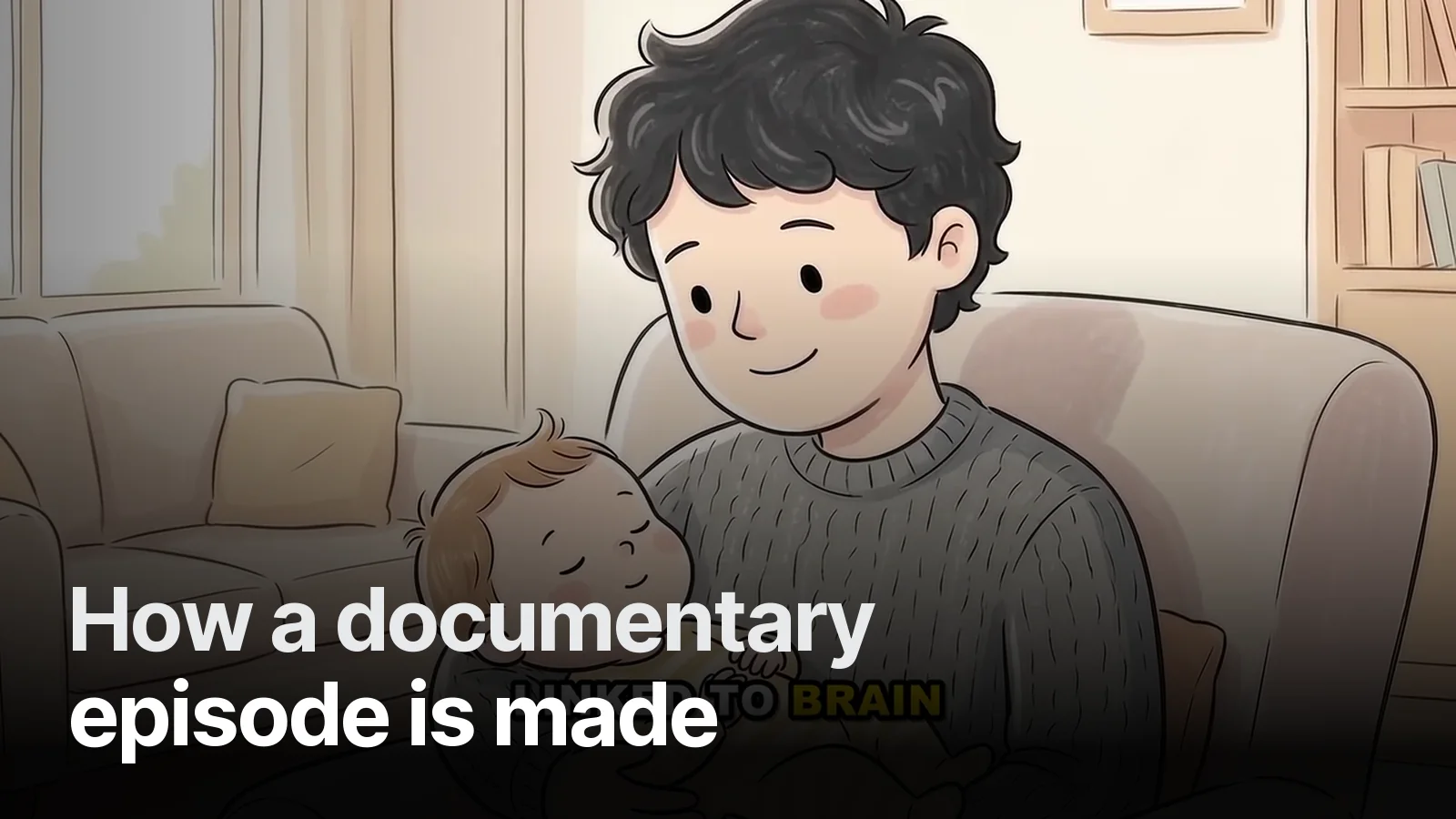
From the outside a faceless documentary looks like "lots of visuals plus a voice". Inside it is eight steps whose order must not break. The noir finance documentary, Ferrari vs Lamborghini and the parenting channel were all made on this line.
1. Script
It starts with the text. A good script for editing has short sentences, one idea per paragraph, and lines that can become pictures. "The economy went through a hard time" doesn't turn into an image; "the price of bread quadrupled in three years" does.
2. Voice-over
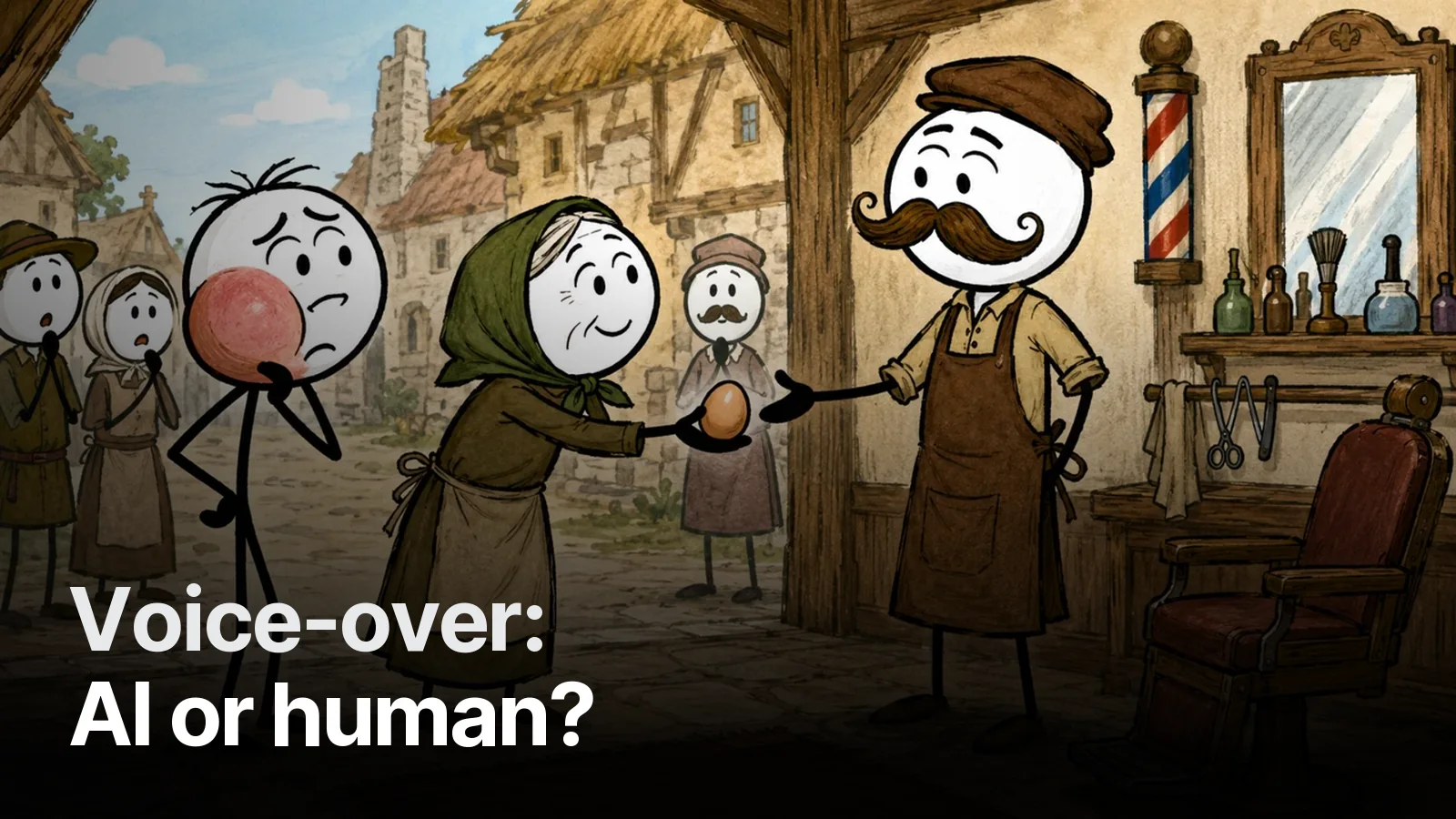
The voice sets the rhythm. It can be the channel's own voice, a voice actor or an AI voice (comparison). It must stay constant within an episode; viewers notice tone shifts.
3. Word timing
The voice-over is timed word by word. Auto-transcript timestamps can drift 0.3–0.4 seconds, so we take cut points from the audio's energy (the silence threshold). Every edit decision hangs on this timeline.
4. Visual system
The channel's language: palette, fonts, character description, a recurring "anchor" graphic (a six-tier pyramid in the noir piece, two brand colours in Ferrari), camera moves. Written down once, it makes every later episode faster.
5. Scene production and checking
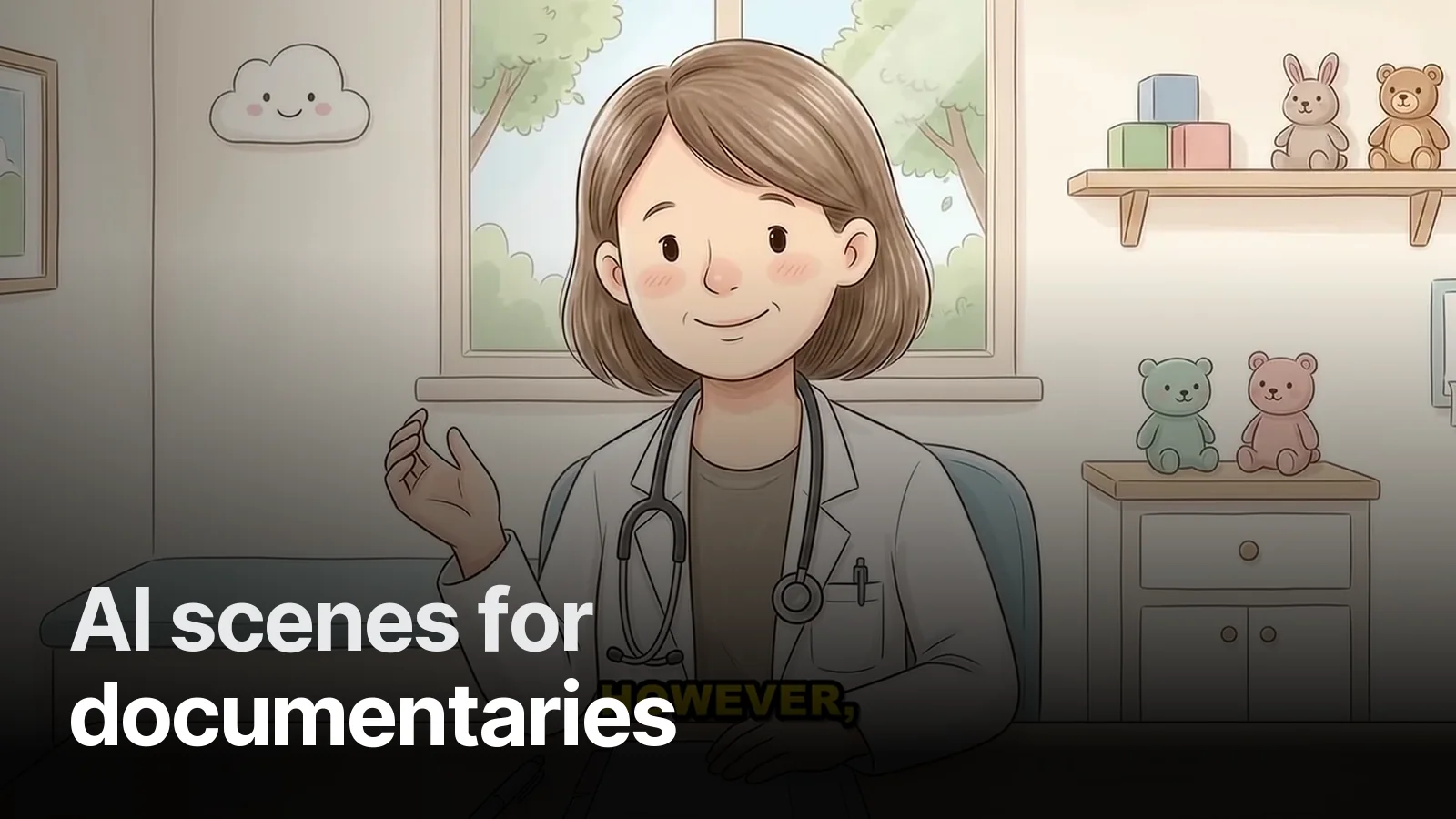
One scene per sentence, or one every 3–6 seconds. With AI scenes every clip is checked frame by frame: did the hair colour change, did an object vanish, did any text break (AI scenes post). Low-resolution stills are upscaled before they enter the edit.
6. Edit
Scenes land on the words and come alive with push-ins and motion. Two rules: no identical image in neighbouring scenes, no repeated scene to fill a gap. On-screen text stays up at least 1.5 seconds.
7. Sound design and mix
Music ducks under the narration and breathes at chapter breaks; whooshes, hits and risers carry tension. Mix at −14 LUFS (sound design post).
8. Captions, thumbnails, delivery
Burned-in captions plus .srt; an upload-ready 1080p or 4K file. Thumbnails come as three ideas, tested with Test & Compare.
| Step | Who | Time (10 min episode) |
|---|---|---|
| Script | Channel / us | 1–2 days |
| Voice-over | Channel / us | 0.5 day |
| Timing + visual system | Us | 1 day |
| Scenes + edit | Us | 3–4 days |
| Sound, captions, thumbnails | Us | 1 day |
Script or voice-over ready? Send it and get a quote within 24 hours: Video & YouTube editing.
Frequently asked
1.How long does one documentary episode take?
With script and voice-over ready, an 8–15 minute episode usually takes 5–7 days. Add a few days if we also write the script or the series' visual system is being built for the first time.
2.Which step takes the longest?
Scene production and checking. Ten minutes can hold 120–200 scenes; checking by eye that each fits the topic, the character and the light takes longer than the edit itself.
3.Do you write scripts too?
Yes, from research notes or a topic. The best results still come from a script that carries the channel's own voice; usually we tighten the text for the edit.
4.How do you keep episodes visually consistent?
In episode one the channel's visual system is written down: palette, fonts, character description, recurring graphic, camera moves. Later episodes are produced by those rules.