Animated corporate website: what a scroll-driven site delivers, how long it takes, what to watch for
What a scrollytelling / animated corporate website is, which brands it suits, how it differs from Wix and ready-made themes, the performance and SEO balance (Core Web Vitals), 3D and WebGL use, process and timeline. With Creatune's own site as the example.
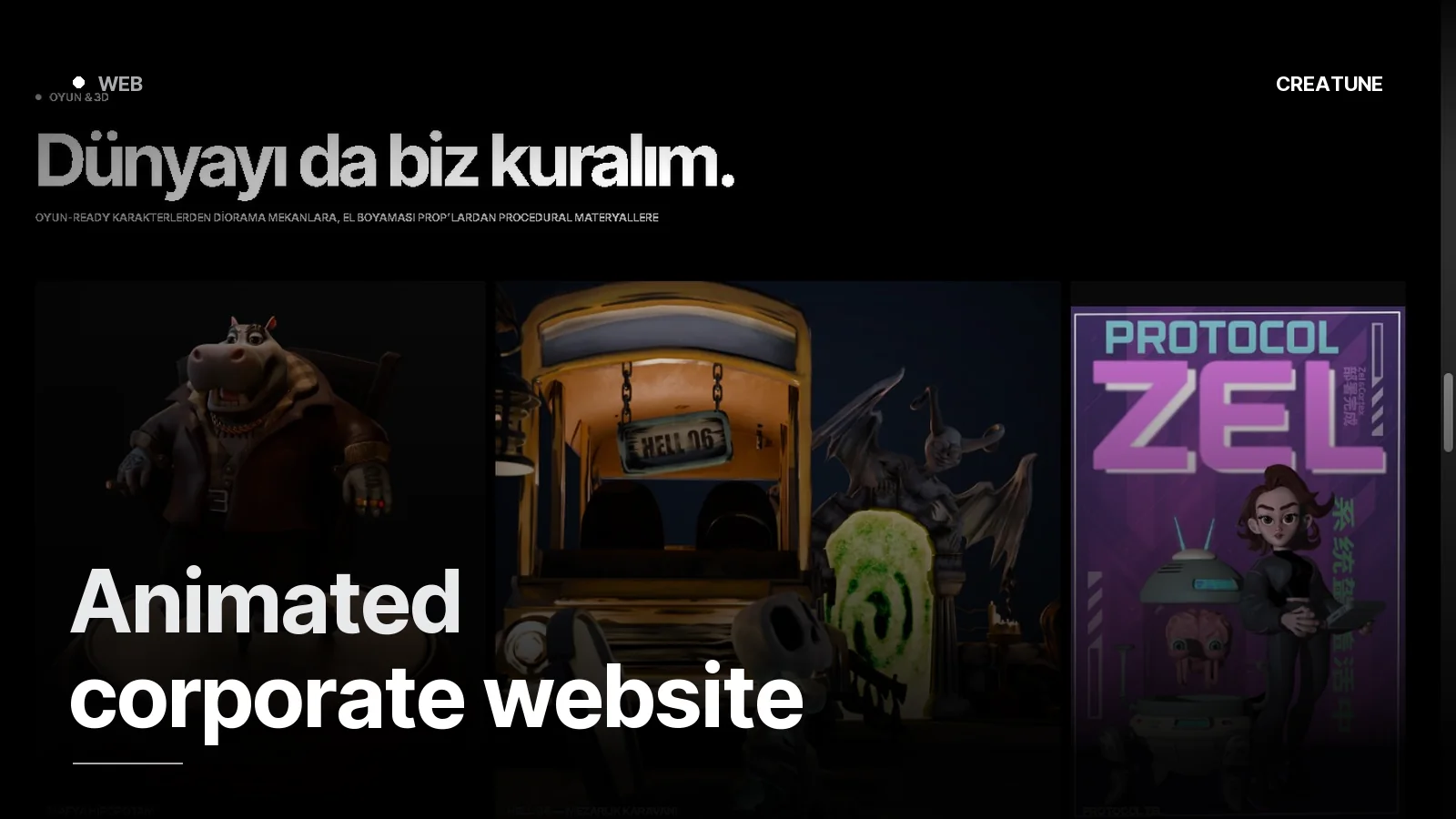
Most corporate websites are a brochure moved onto a screen. An animated, scroll-driven site takes the visitor on a journey instead: the product turns as you scroll, the headline arrives line by line, the scene changes. The visitor does not read — they experience, and remember.
Who is it for?
- Brands with a product launch (one product, one story)
- Agencies, studios, architecture, interior design — the work itself is visual
- Automotive, furniture, technology — any product that has a 3D model
- Companies selling a premium service — the site itself is proof of quality
Not for: e-commerce with hundreds of products, news sites, frequently updated catalogues. There, speed and order matter more than animation.
How it is built (the Creatune approach)
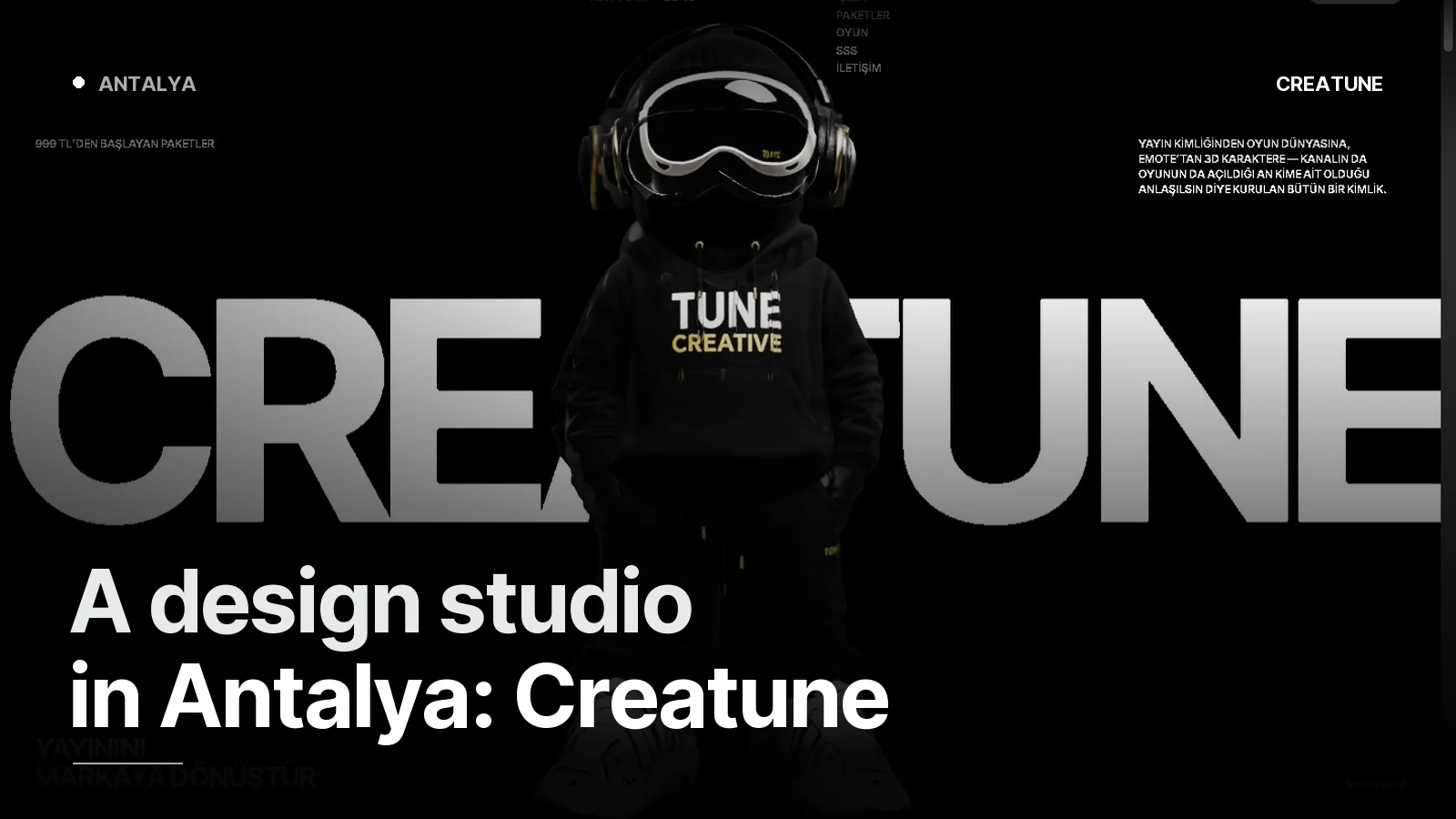
Our own site creatuneagency.com is built on this logic: black ground, one grotesque typeface, chrome typography, a mascot that turns a full circle as you scroll, copy flowing over it. The technical skeleton:
- Static HTML base. Every page is generated as real HTML; search engines and AI bots read all of the content without the animation.
- Scroll engine. GSAP ScrollTrigger + Lenis: sections pin, motion is tied to scroll progress (scrub).
- 3D layer. Real 3D via Three.js (the chrome word) or an image sequence (turntable video → 120 alpha-cut frames) — chosen by device power. Without WebGL, a static image remains.
- Performance budget. Main bundle under 10 KB, heavy libraries loaded dynamically, images in WebP and sized; LCP < 2.5 s, CLS < 0.1.
- Accessibility. With
prefers-reduced-motionon, self-running motion stops; content stays identical. - Two languages = two URLs. Not a toggle but
/and/en/— the right approach for SEO and GEO.
It does not conflict with SEO and GEO
The belief that "animated sites don't rank on Google" comes from old sites where content was injected by JavaScript afterwards. The correct setup today:
- Content in static HTML, animation layered on top
- Every page with its own title / description / JSON-LD (Organization, Service, FAQ, Breadcrumb)
- Sitemap + hreflang,
robots.txt,llms.txt - Images with
alttext andloading="lazy" - Blog generated from real Markdown; a new post = a new URL
That is why the Creatune site is fully animated and as indexable as the fact that you are reading this post. For AI search engines specifically: What is GEO?
Process and timeline
| Phase | Time | Output |
|---|---|---|
| Discovery + content map | 3–5 days | page list, story flow, copy draft |
| Direction (design language) | 1 week | 1–2 screens, typography, colour, motion language |
| Production | 2–4 weeks | all pages, animation, 3D, two languages |
| Test + launch | 3–5 days | real-device tests, Lighthouse, DNS, SSL |
A single-page launch site takes 2–3 weeks; a 5–8 page corporate site 4–8 weeks. Hosting is static (Netlify/Vercel), monthly cost near zero; the domain stays yours.
What to bring
Brand guide (logo, colours, fonts), product images / 3D model (if there is none, we produce it — Game & 3D), a first draft of the copy, 2–3 sites you like. The rest is on us.
For corporate and premium websites, write on WhatsApp or by email; we come back with a direction and a quote within 48 hours.
Frequently asked
1.What is a scrollytelling website?
A site where the story advances as you scroll — sections pin, images move with the scroll, 3D objects turn, headlines appear line by line. Used for product launches, agencies, architecture, automotive and premium brands; the visitor experiences instead of reading.
2.Does an animated site hurt SEO?
Not when built correctly. Content is served as static HTML (animation is layered on top), every page has its own URL, title and structured data, heavy libraries load on demand and Core Web Vitals targets (LCP < 2.5 s, CLS < 0.1, INP < 200 ms) are kept. Creatune's own site is built this way.
3.How long does an animated corporate site take?
A single-page launch site 2–3 weeks; a 5–8 page corporate site with two languages and a blog 4–8 weeks. Content preparation (copy, images, video) affects the timeline most.
4.How is it different from a Wix / WordPress theme?
A ready-made theme is the same skeleton for everyone and carries animation as a plugin; it is heavy and customisation is limited. A code-based custom site is built around the brand, is light, measurable and entirely yours (on static hosting like Netlify/Vercel the monthly cost is near zero).