Stylised vs realistic 3D game art: which fits your game, budget and platform?
How to choose between stylised and realistic 3D art for a game: readability, production cost, platform limits, how the art ages, and hybrid options like stylised PBR. With a decision table.
Short answer: choose stylised if you are an indie or mobile team, want the art to age well and need strong readability; choose realistic if your game's promise is immersion (simulation, horror, military) and you have the budget for detailed textures and heavy optimisation. Many successful games sit in between with stylised PBR.
The decision table
| Question | Leans stylised | Leans realistic |
|---|---|---|
| Team size | Solo to ~15 people | Larger art team or outsourcing budget |
| Platform | Mobile, Switch, web, low-end PC | High-end PC / console |
| Game promise | Fun, clarity, personality | Immersion, simulation, fear |
| Art lifetime | Should still look good in 5 years | Aims for "wow" at launch |
| Asset count | Many assets, fast iteration | Fewer, heavier hero assets |
What stylised gives you
- Readability. Exaggerated shapes and colour blocks make gameplay clear: enemies, pickups, interactables.
- A recognisable identity. A distinctive style is marketing — your screenshots are recognised in a feed.
- Budget room. Fewer maps and smaller textures; see mobile character budgets.
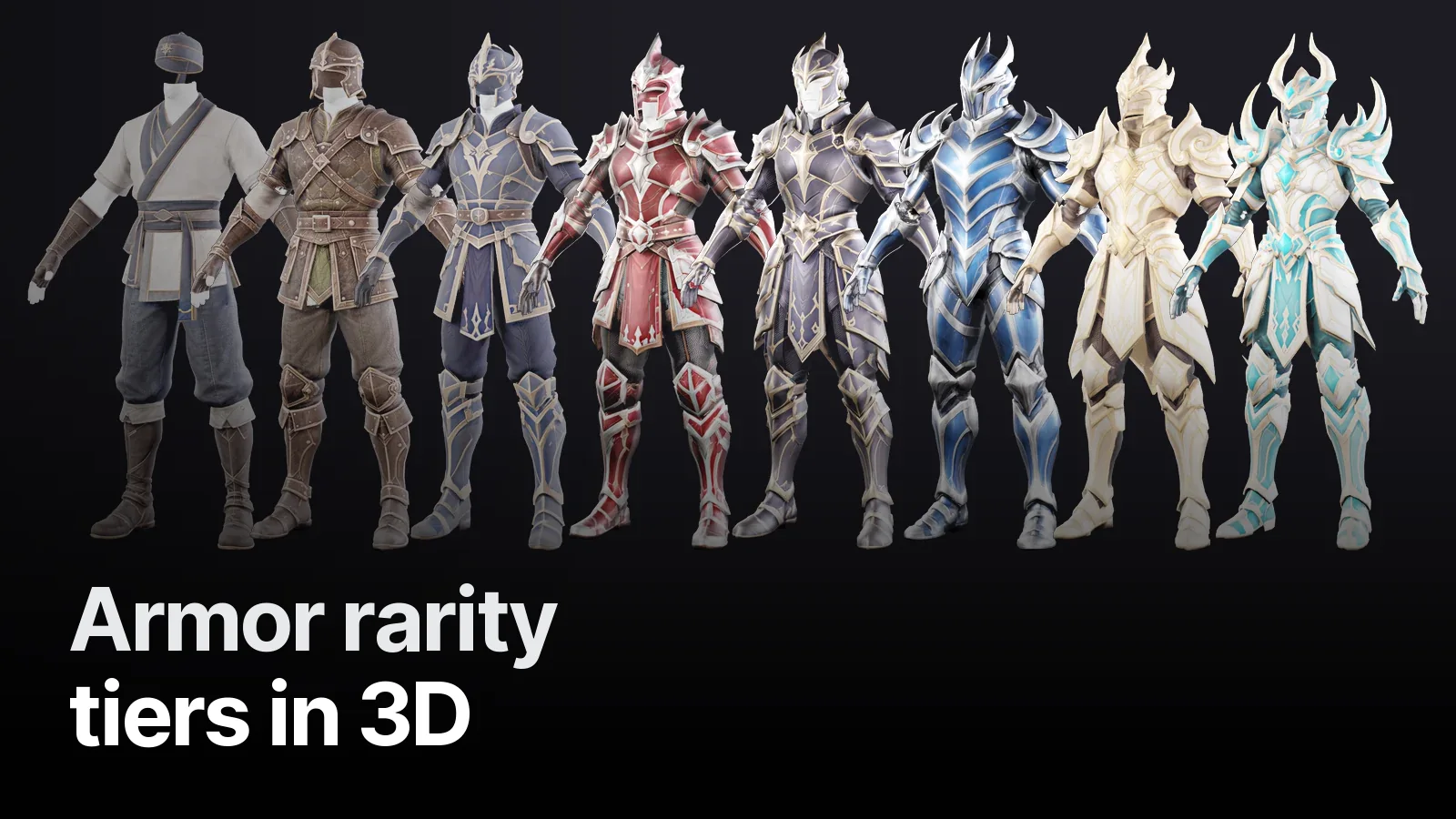
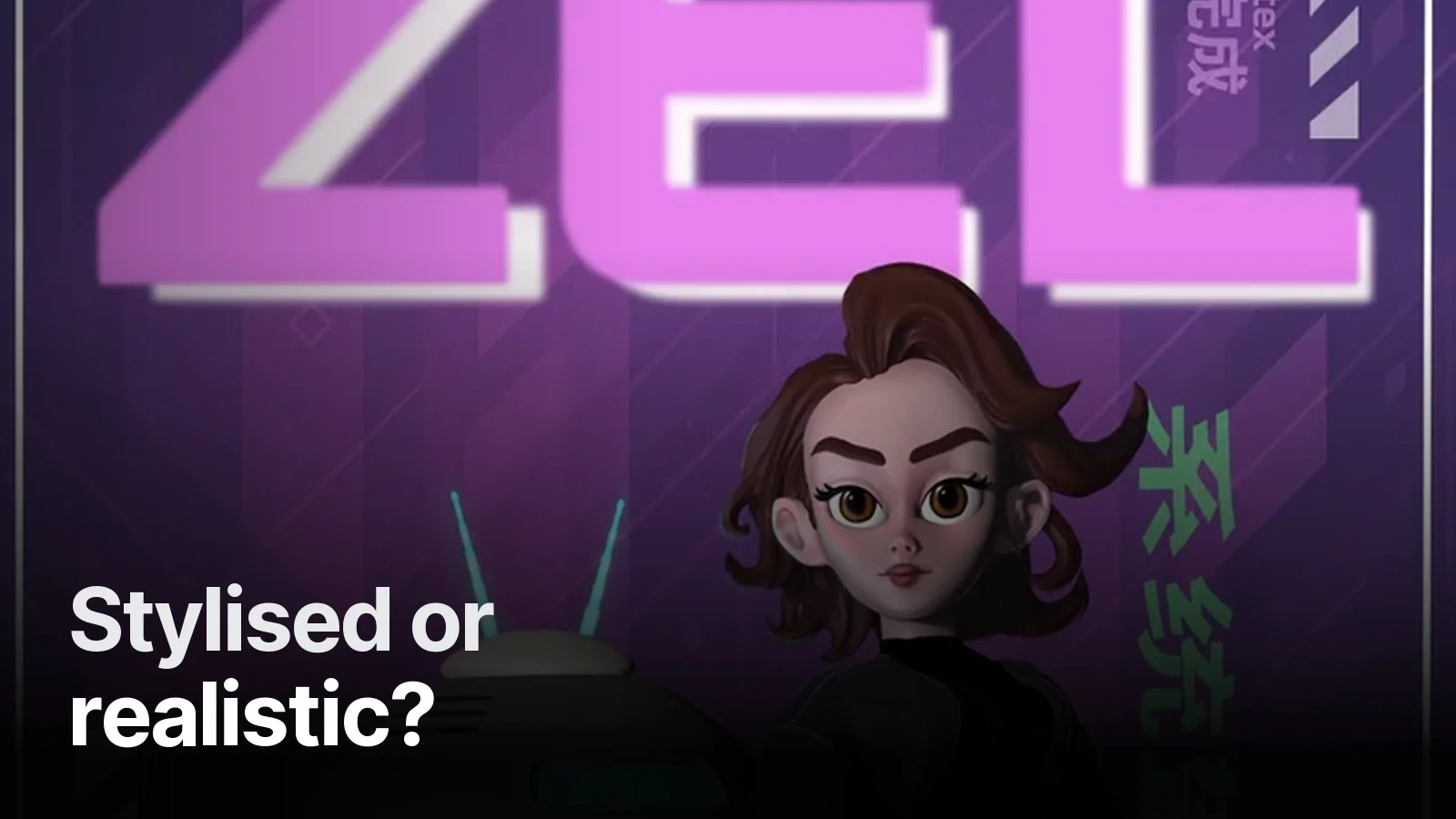
- Plenty of sub-styles: hand-painted, toon/cel, flat colour, low-poly, stylised PBR. Our Leather-wrapped Thermos is fully hand-painted; Protocol Zel is stylised character design.
What realistic gives you
- Immersion. Players accept the world as real, which horror and simulation need.
- Library support. Photogrammetry and material libraries speed up environments.
- But realism raises the bar everywhere — animation, lighting and audio must match, or the game drops into "almost real" and feels off.
The hybrid: stylised PBR
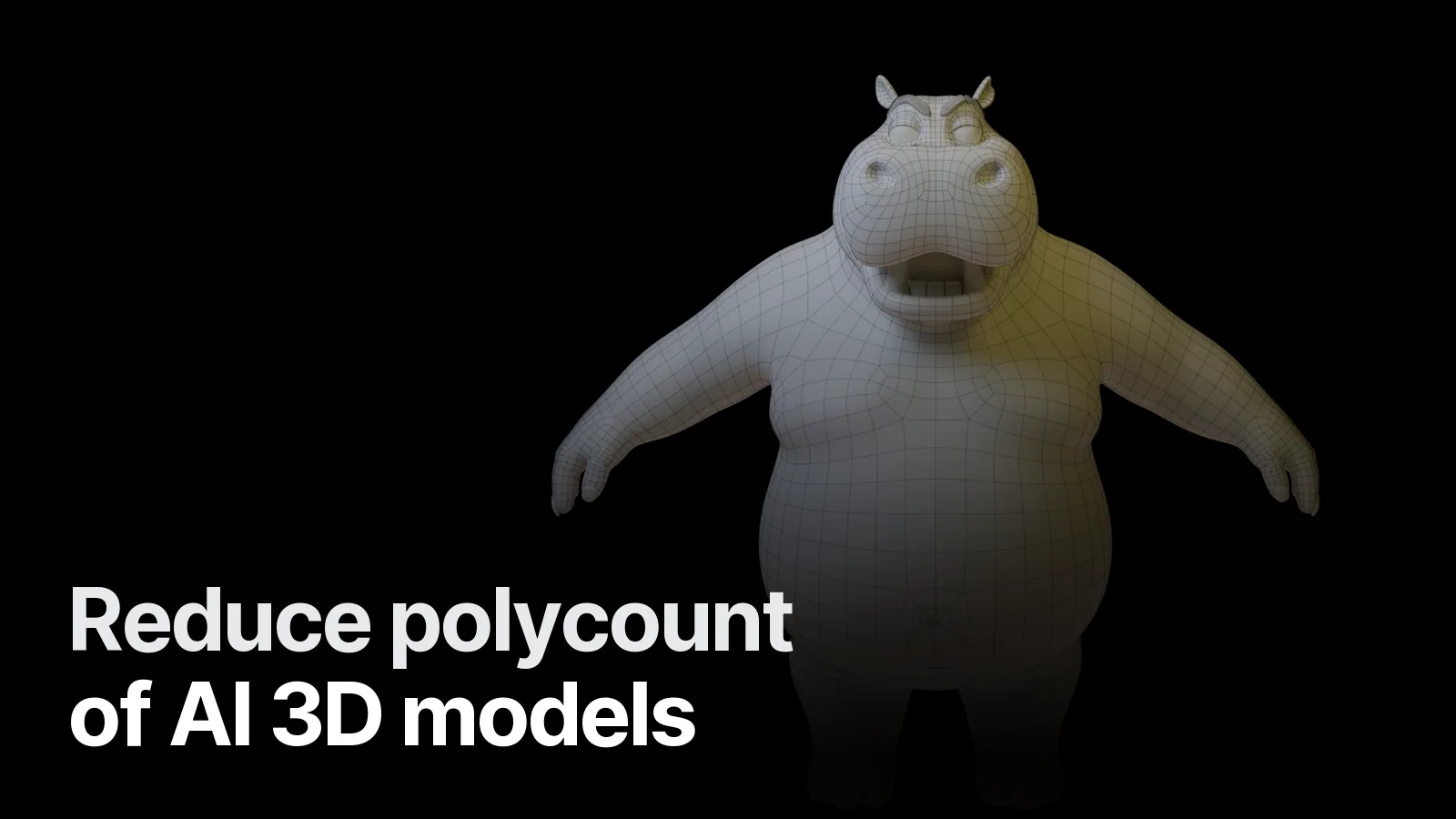
Designed forms, physically based materials. Light behaves realistically on metal, leather and skin, but shapes are exaggerated. It is the look of many modern indie hits and works well in Unity URP, Unreal and Godot. Our Mafia Hippo uses this approach. Material basics: what is PBR texturing; the painted alternative: hand-painted textures.
Decide in one afternoon
- Collect 10 screenshots of games you would be proud to sit next to on a store page.
- Group them — which share a style? That group is your direction.
- Order one test asset (a prop or a character bust) in that style before committing the whole game.
- Look at it in your engine, at your camera distance, on your weakest device.
Working with us
At Creatune we build stylised and realistic game assets in Blender, with most of our portfolio in stylised and stylised-PBR work. Unsure which way to go? We can make a single style test first. See the Game & 3D page or send references on WhatsApp.
Frequently asked
1.Is stylised art cheaper than realistic art?
Usually per asset, yes — stylised assets need fewer texture maps, less scan-level detail and hold up on lower budgets. But a stylised game still needs a strong, consistent art direction, which takes design time up front.
2.Which style ages better?
Stylised art generally ages better because it does not compete with the latest rendering tech. Realistic games tend to look dated sooner as engines improve.
3.What is stylised PBR?
Physically based materials (BaseColor, Normal, Roughness, Metallic) applied to exaggerated, hand-designed shapes. It gives stylised games a premium, tactile look while keeping realistic light behaviour.
4.Which style is best for a mobile game?
Stylised in most cases — it reads well on small screens, compresses better and leaves more performance for gameplay. Realistic mobile games exist but need much tighter optimisation.