Hand-painted textures for stylised games: when to use them, how they are made, and how they perform
What hand-painted texturing is, why it suits stylised and mobile games, how it compares to PBR, the workflow from UVs to painted light, and how to keep painted assets consistent across a whole game.
Short answer: hand-painted texturing paints light, shadow and material directly into the colour map. It gives stylised games a strong, illustrative identity and is very cheap to render — often one texture and a simple shader per asset — which makes it a favourite for mobile, web and stylised PC games.
Hand-painted vs PBR at a glance
| Hand-painted | PBR | |
|---|---|---|
| Maps | Usually BaseColor only (+ optional emissive/alpha) | BaseColor, Normal, Roughness, Metallic, AO |
| Lighting | Painted in; works unlit | Real-time, physically based |
| Performance | Very light | Heavier |
| Dynamic day/night | Limited | Natural |
| Look | Illustrative, painterly | Realistic or stylised-realistic |
More on the PBR side: what is PBR texturing.
How a hand-painted asset is made
- Model with clean, simple forms. Painted light reads best on clear planes.
- UVs with generous space for the parts seen most; hidden faces get little or none.
- Base colours laid in flat.
- Ambient occlusion and gradient — darker at the bottom and in crevices, lighter towards the top: the "painted light" direction.
- Form shading and edges — highlights on upper edges, worn corners, subtle hue shifts rather than pure black shadows.
- Material detail — wood grain, stitching, scratches painted by hand.
- Check in engine with the intended shader (unlit, toon or simple lit).
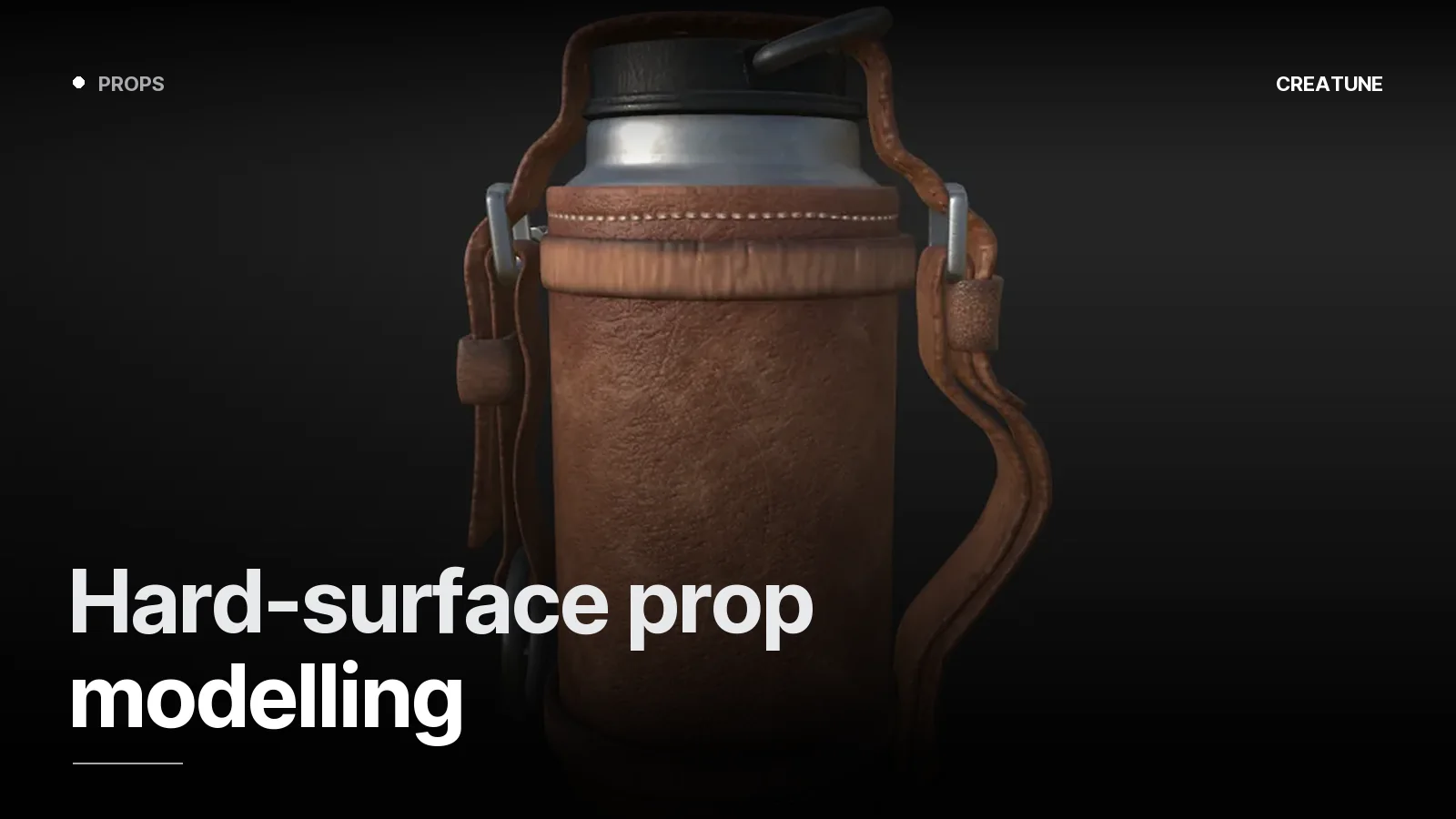
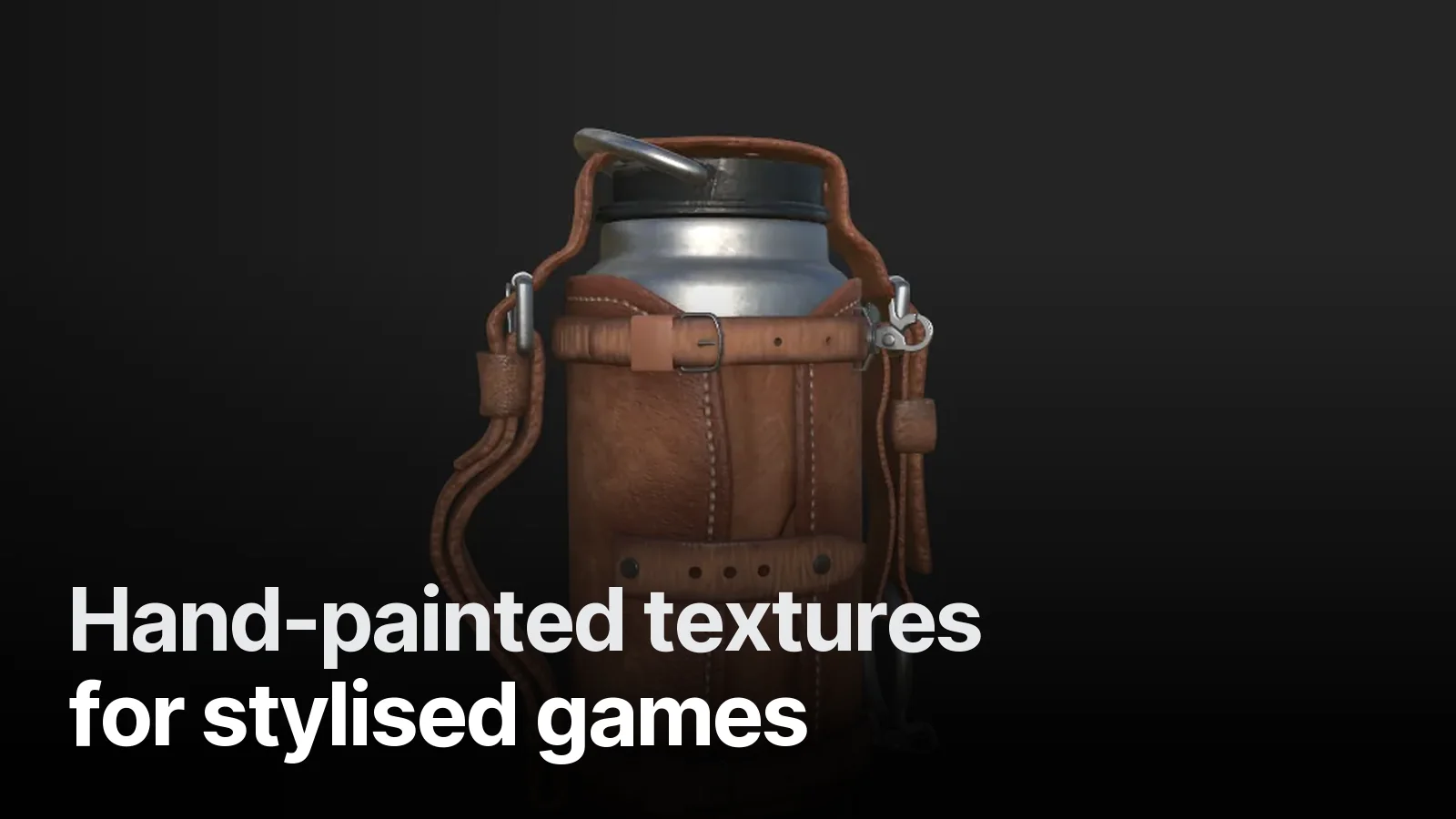
Our Leather-wrapped Thermos is fully hand-painted: leather, metal and stitching are all painted, no PBR maps.
Performance on mobile
- One texture per asset — or one atlas per set.
- Works with unlit shaders, so lighting cost can be close to zero.
- Survives ASTC compression well because there is no fine normal-map detail to lose.
That is why hand-painting pairs so well with mobile game characters and low-poly models.
Keeping a whole game consistent
- One light direction for every painted asset (usually top-left).
- A fixed palette with 5–8 key hues and their shadow/highlight shifts.
- Texel density rule so a crate and a character have the same "brush size".
- Reference assets — 2–3 approved pieces that every new asset is compared to.
Working with us
We paint textures for stylised props, characters and environments, or combine painted colour with stylised PBR. See the Game & 3D page, or send references on WhatsApp.
Frequently asked
1.What are hand-painted textures?
Textures where colour, light, shadow and material detail are painted by hand into the BaseColor map, instead of being produced by PBR maps and real-time lighting. The look is illustrative, like a painting wrapped around the model.
2.Are hand-painted textures good for mobile games?
Yes — they often need only one texture per asset and can run with very cheap unlit or simple lit shaders, which saves memory and GPU time.
3.Hand-painted or PBR?
Hand-painted gives a strong illustrative identity and great performance; PBR reacts realistically to dynamic lighting. Stylised PBR sits between them. The choice depends on your lighting and art direction.
4.How do you keep hand-painted assets consistent?
A shared light direction, a fixed palette, a texel-density rule and a style guide with 2–3 reference assets that every new asset is checked against.