Hard-surface prop modelling: producing objects for games — hand-painted or PBR?
Modelling hard-surfaced objects for games — weapons, vehicle parts, thermoses, consoles: the high-poly → low-poly → bake process, hand-painted vs PBR textures, hero vs filler props, poly budgets and delivery formats.
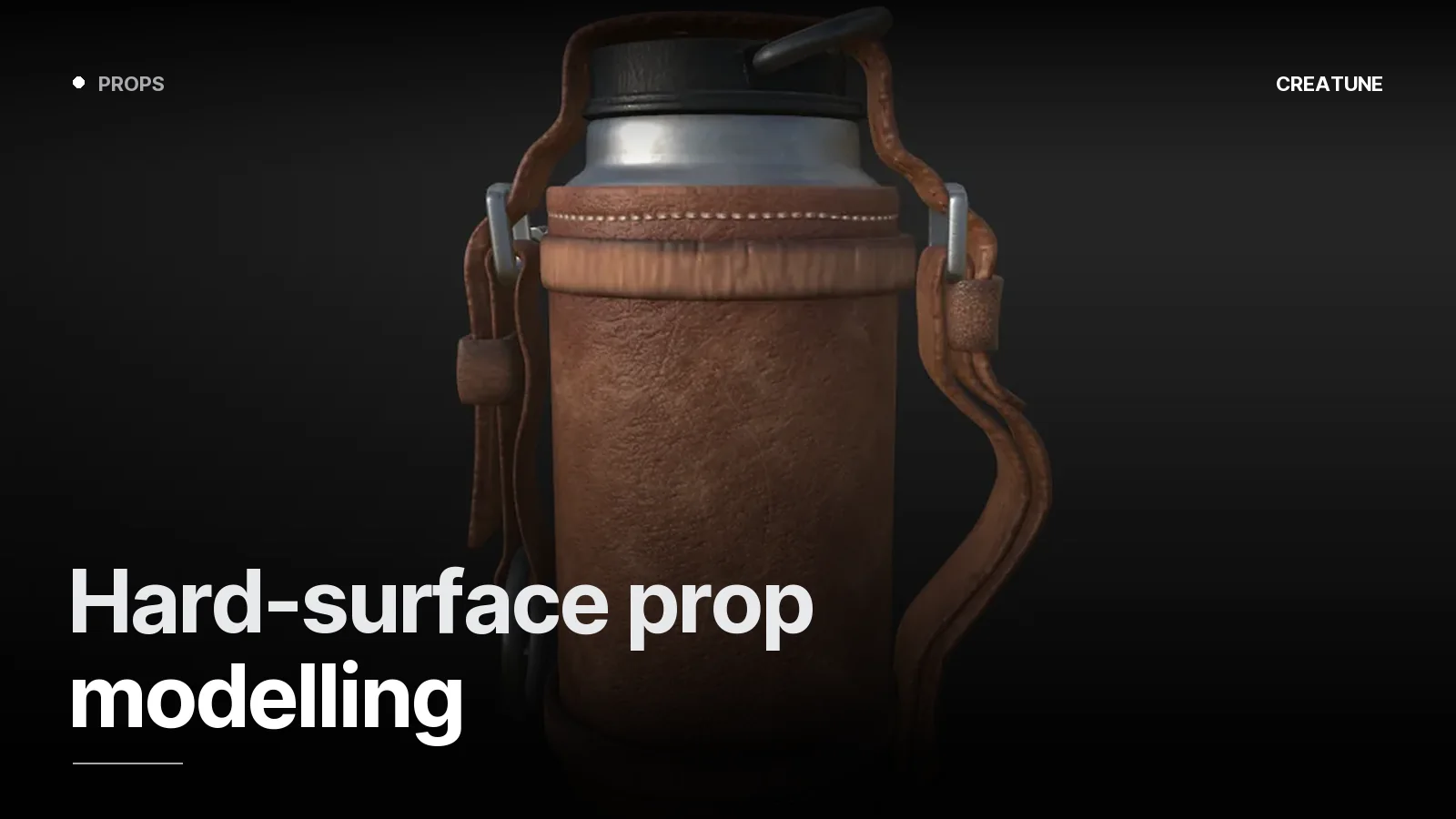
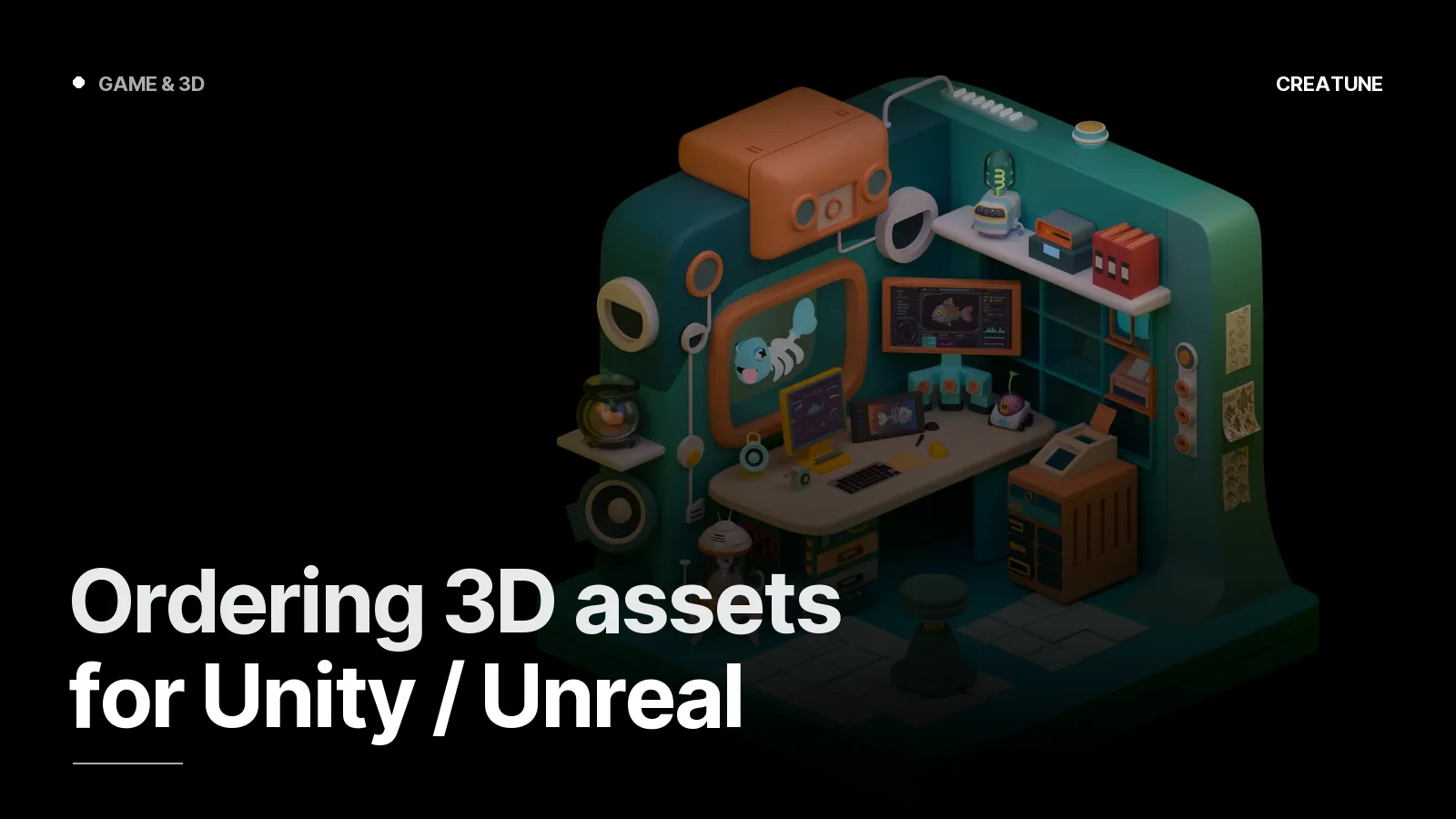
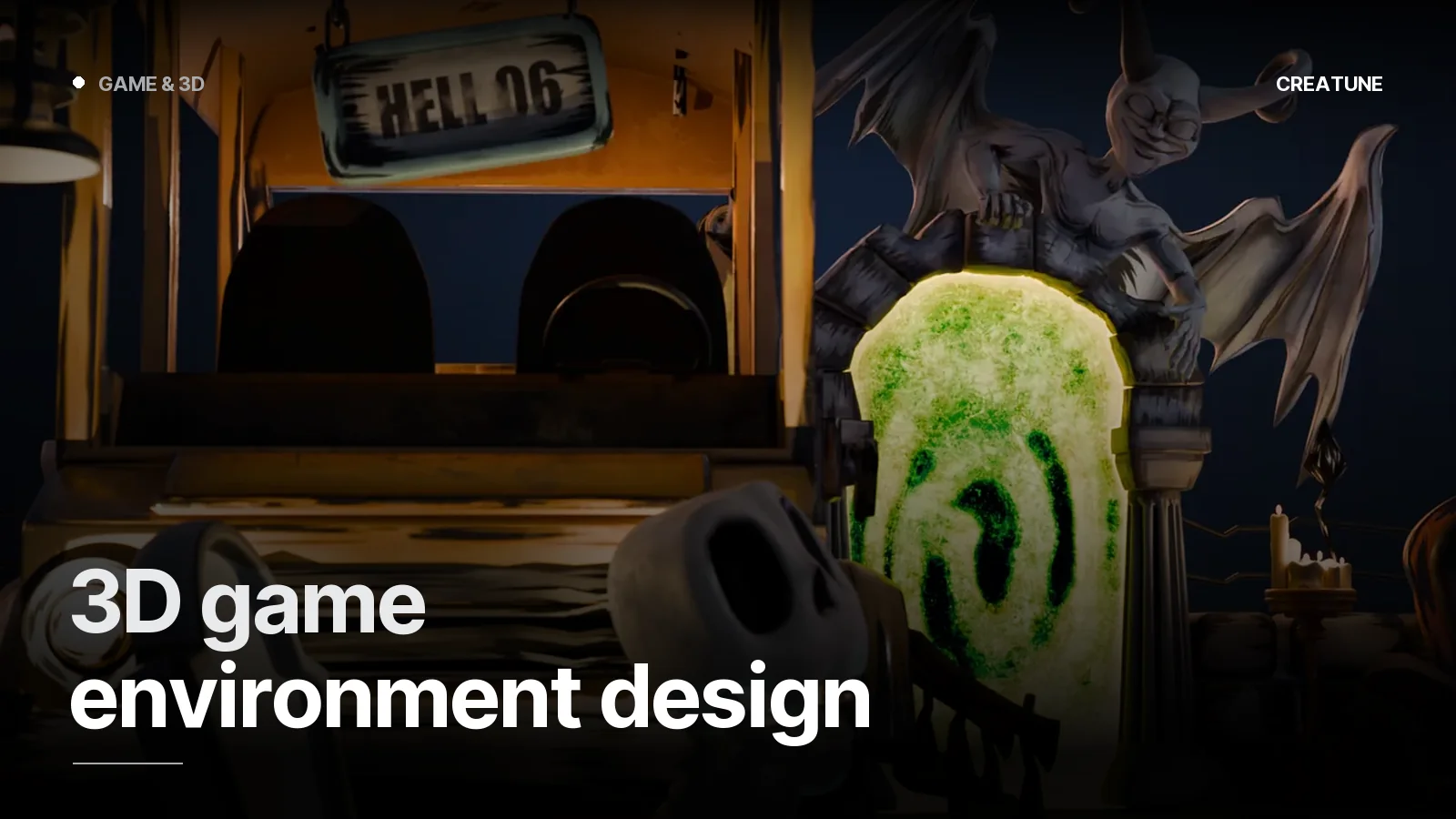
Props are the objects that make a game world real: the thermos on the desk, the console on the wall, the cauldron in the corner. They draw less attention than characters, but there are hundreds of them and their quality is the scene's quality. The leather-wrapped thermos is a fully hand-painted hero prop; the cauldron and gargoyle in Hell 06 are set-dressing props.
Process (hero prop)
- Reference. 3–5 photos or a concept; measurements taken from real objects.
- Blockout. Main masses, proportion, scale (1 unit = 1 m).
- High-poly. Subdivision / booleans for crisp edges, screws, seams, bevels — edges for light to catch.
- Low-poly. A clean mesh within the game budget; silhouette kept, detail moved to textures.
- UVs. Consistent texel density, seams on hidden edges; symmetrical parts overlapped (mirrored) in UV to gain space.
- Bake. Normal, AO, Curvature, ID from high-poly to low-poly; these maps are the foundation of texturing.
- Textures. PBR (Substance / Blender) or hand-painted (Blender / Photoshop / 3DCoat).
- Presentation + delivery. Turntable, wireframe, FBX/GLB, texture set.
Hand-painted vs PBR
| Hand-painted | PBR | |
|---|---|---|
| Light | painted into the texture | computed by the engine |
| Style | stylised, characterful | realistic / semi-stylised |
| Texture count | 1 (BaseColor) + optional Normal | 4–5 (BaseColor, Normal, Roughness, Metallic, AO) |
| Performance | very light (mobile) | medium |
| Response to changing light | limited | correct |
| Example | thermos, Dota/WoW style | realistic FPS, sims |
The decision comes from the game's existing assets: the style lock. PBR in detail.
Hero and filler
- Hero: seen from 1 m → own 2K–4K texture set, 5k–15k triangles, full bake.
- Filler: seen from 5+ m → atlas/trim sheet, 300–2k triangles, no bake or a quick one.
- Modular: environment guide.
On a set order (e.g. "sci-fi lab, 25 props") this split comes first: 5 hero + 20 filler, budget accordingly.
Quality markers in hard-surface
- A bevel on every edge — a sharp 90° edge does not exist in the real world and catches no light.
- Correct scale — door handle 10 cm, thermos 25 cm; tested next to the character.
- Wear that makes sense — scratches where it is held, rust where water runs.
- Invisible seams — UV seams on the underside/back.
- Clean wireframe — no n-gons, no long thin triangles.
Delivery
FBX + GLB, textures as PNG (packed for the engine), .blend on request, turntable MP4 and wireframe image. Poly and texture budgets locked in the brief.
For a prop or prop set, send reference and count on WhatsApp; quote within 24 hours. All game work: Game & 3D.
Frequently asked
1.What does hard-surface mean?
Non-organic, rigid and usually man-made surfaces: weapons, vehicles, machines, furniture, containers, consoles. The opposite of organic modelling (characters, creatures, plants); it needs crisp edges, clean geometry and mechanical detail.
2.Hand-painted or PBR?
Hand-painted textures paint light and shadow into the texture; in stylised games (WoW, Dota, mobile) they look characterful and cost little to render. PBR textures carry physical light response (metalness, roughness); in realistic and semi-stylised games they look correct under real-time light. The game's existing style decides.
3.What is the difference between a hero prop and a filler prop?
A hero prop sits near the camera and the player interacts with it (weapon, key item); it gets its own 2K–4K texture set and high detail. A filler prop is seen from a distance and fills the scene; atlas-textured, low poly. Giving both the same budget means either waste or poor quality.
4.How long does a prop take?
A filler prop 1–2 days, a hero prop (high-poly, bake, full PBR or hand-painted) 3–7 days. Ordering as a set (10+ props) lowers the per-piece time.