Ordering 3D assets for Unity and Unreal: how to brief, poly budgets, formats and delivery
A guide for game studios and indie developers ordering 3D assets (environments, props, modular kits, materials): the right brief, poly and texture budgets, FBX/GLB/USD formats, Unreal ORM and Unity Metallic-Smoothness packing, collision and LODs.
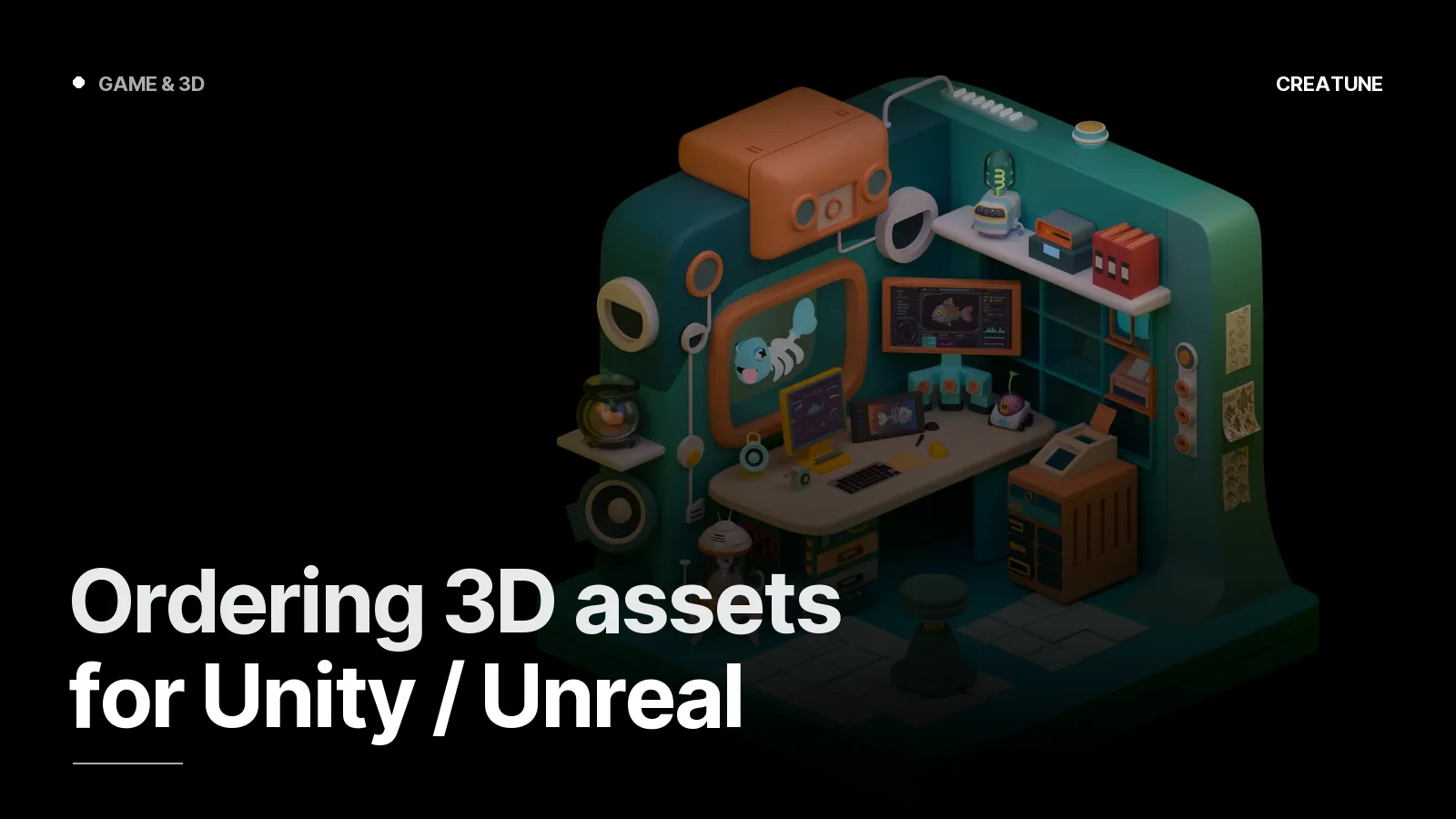
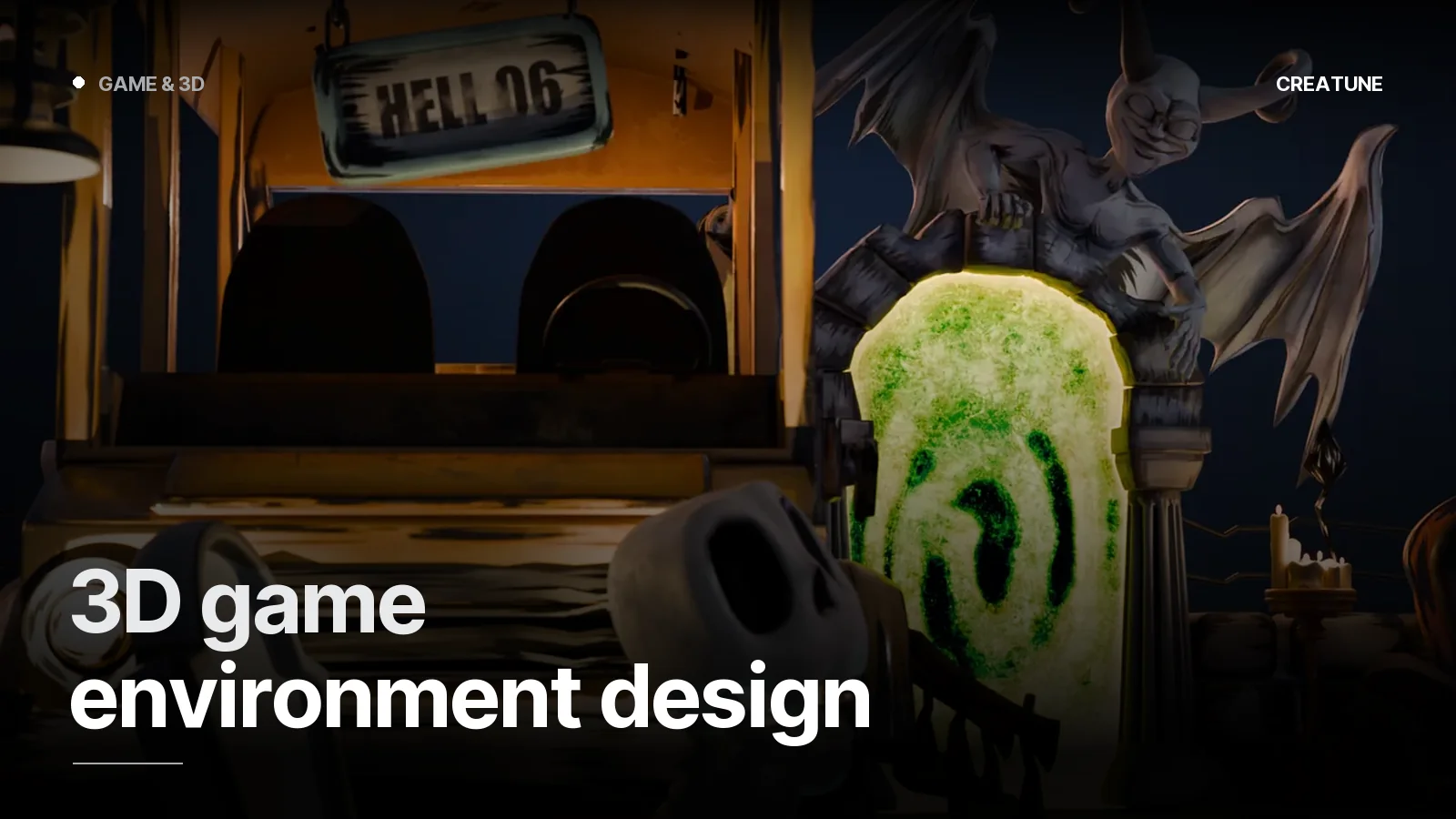
Outsourcing 3D assets is where studios lose the most time — with an incomplete brief, the asset lands in the engine and the "wrong scale, flipped normals, texture packing doesn't match" rounds begin. This post sets out what to say when ordering and what to expect at delivery. The isometric sci-fi room and the Hell 06 graveyard diorama were produced to this standard.
What goes into a good brief?
- Engine + version. Unity 6 / URP or HDRP; Unreal 5.x, using Nanite or not; Godot 4. Texture packing and normal orientation follow from this.
- Platform. Mobile means tight poly and texture budgets; PC/console means a Nanite/LOD decision.
- Style reference. 3–5 of the game's existing assets or a moodboard. New assets must fit the world; "nice, but it doesn't look like our game" is the most expensive revision.
- Piece list. Not "sci-fi room" but: 6 wall modules, 2 doors, 3 consoles, 1 desk, 4 decor props, 1 texture atlas.
- Scale reference. Character height (e.g. 1.8 m) and grid (1 m). Will the door be walked through, the desk sat at?
- Budgets. Poly (triangles) and texture resolution (1K/2K/4K), material count limit.
- Delivery format. FBX / GLB / USD / .blend; whether collision, LODs and lightmap UVs are needed.
Poly and texture budgets (guide values)
| Target | Prop (triangles) | Module / environment piece | Textures |
|---|---|---|---|
| Mobile | 300–2k | 500–3k | 512–1K, atlas |
| PC / console (with LODs) | 2k–15k | 5k–30k | 2K, 4K for hero pieces |
| Unreal Nanite | free (hundreds of thousands) | free | 4K, virtual texturing |
| Web / Godot | 1k–8k | 3k–15k | 1–2K, embedded in GLB |
Formats and packing
- Unreal: FBX (binary 2020), scale in cm, Z-up conversion at export; textures as ORM (R: AO, G: Roughness, B: Metallic) + BaseColor + Normal (DirectX, Y-). Collision as UCX__00 inside the same FBX. Lightmap UVs on the second channel.
- Unity: FBX or GLB; textures as BaseColor + Metallic-Smoothness (alpha: smoothness) + Normal (OpenGL, Y+) + AO. URP/HDRP matters — tell us.
- Godot / web: GLB (glTF 2.0), textures embedded or alongside; standard PBR metallic-roughness.
- Source: .blend on request; a clean copy with modifiers applied plus the working copy.
Every delivery includes a screenshot taken inside the engine — it ends the "it looks different on our side" debate.
Modular kit logic
For environment assets the most efficient route is a modular kit: pieces snap to a grid (1 m or 50 cm), pivots at corners, everything connects with snapping. One texture atlas plus a trim sheet keeps dozens of pieces in 1–2 materials; draw calls drop. In Hell 06 the portal, gargoyle, cauldron and caravan were built as modular pieces.
Materials / shaders
Not just meshes: we also produce procedural materials and VFX loops — ice, lava, marble, chrome, crystal, cartoon fire (loops). Substance or Blender node-based; portable to the engine's shader graph.
Process and delivery
- Brief → quote within 24 hours (count, timeline, price).
- Blockout and grid test (in-engine screenshot) → approval.
- High-poly / detail → retopo → UVs → textures.
- Engine test: import in Unity or Unreal, check scale, normals, collision.
- Delivery pack: meshes, texture sets (both packings), source,
README(naming, scale, pivot notes).
Send the piece list and references on WhatsApp or by email. For characters: Commissioning a 3D game character.
Frequently asked
1.What should I include when ordering 3D game assets?
Target engine (Unity/Unreal/Godot) and version, platform (PC, console, mobile, web), art style references, poly and texture budgets, the list of pieces, a scale reference (character height) and the delivery format. With those clear, a quote comes within 24 hours.
2.What is the texture packing difference between Unity and Unreal?
Unreal usually wants ORM (Occlusion-Roughness-Metallic in one texture, RGB channels) and uses DirectX (Y-) normals; Unity Standard/URP wants Metallic-Smoothness (smoothness in the alpha channel) and OpenGL (Y+) normals. Creatune delivers both packings.
3.What is a modular environment kit?
Walls, floors, corners, doors, pillars produced as a set that snaps to a grid (e.g. 1 m / 100 cm) and connects repeatedly. The level designer builds unlimited combinations; a shared texture atlas keeps draw calls low.
4.Do deliveries include collision and LODs?
On request, yes — UCX_-prefixed collision meshes for Unreal, simple collider meshes for Unity; 2–3 LOD levels. Stated in the brief, they are included in price and timeline.